U30B 833

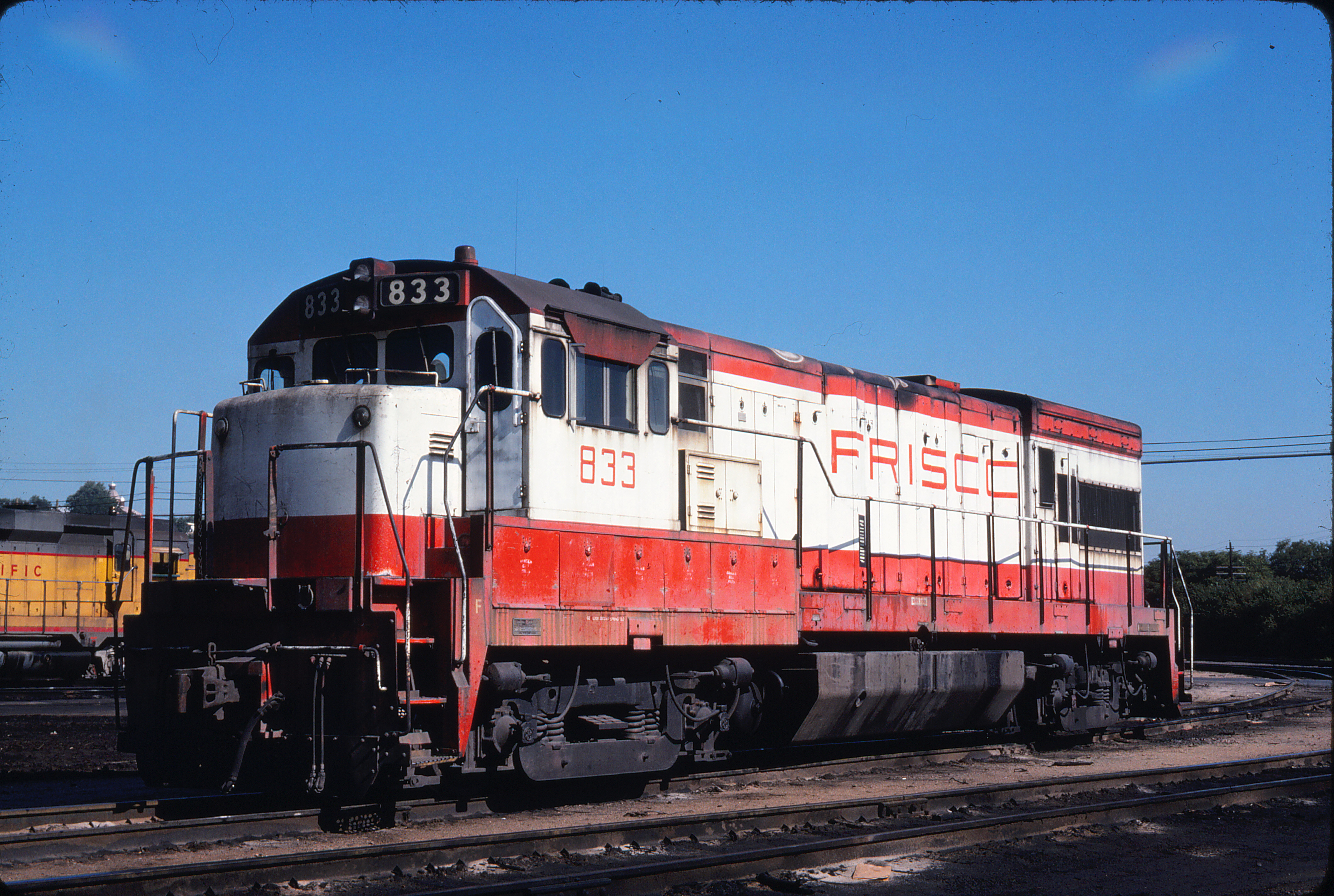
U30B 833 at Kansas City, Kansas in September 1978 (Michael Wise)
U30B 833

U30B 833 at Kansas City, Kansas in September 1978 (Michael Wise).

This photograph was taken in Armourdale Yard of the Union Pacific (UP) Railroad. This yard is in the Kansas River bottomland, 1.5 miles south of the city’s downtown. Their engine service facilities were near the middle of the yard, south of the railroad’s modern freight house. Beyond the nose of the subject locomotive is a GP30 of the host railroad.

Above the UP engine, in the distance on the river bluff, is the top of an onion shaped church spire. This is the “Old” Holy Trinity Orthodox Church, founded in 1917, at 557 Lowell Avenue. The church is in the historic Russian Hill section of the larger Strawberry Hill neighborhood.

To the right of the locomotive in the tree and pole line is the northwestern branch of the Kansas City Terminal (KCT) Railway’s elevated High Line. Its north end ascends from North Cypress Junction, south of James Street. This branch continues south, east of and parallel to Interstate 70, west of the Kansas River. As seen in this view it is just before crossing over Armourdale Yard.

South of the yard it then joins its western branch ascending from Terminal Junction, under the Seventh Street overpass. These routes join at High Line Junction. The junction is over Berger Avenue, just west of its intersection with Adams Street. The two lines then continue in a generally southerly direction, cross the Kansas River on a double deck, 4 track (2 each level), hydraulic lift bridge.

Continuing on the route passes over the Kansas/Missouri state line. Just beyond, at State Line Junction, the lines split again. One branch turns northeast descending toward Kansas City Union Station (KCUS). The other line diverts to the southwest, passes closely to the west of the KCT roundhouse and descends to 29th Street Interlocking.

The view is looking north.

Special thanks to Mark Davidson.
Posted in Slides | Tagged , , | Leave a comment

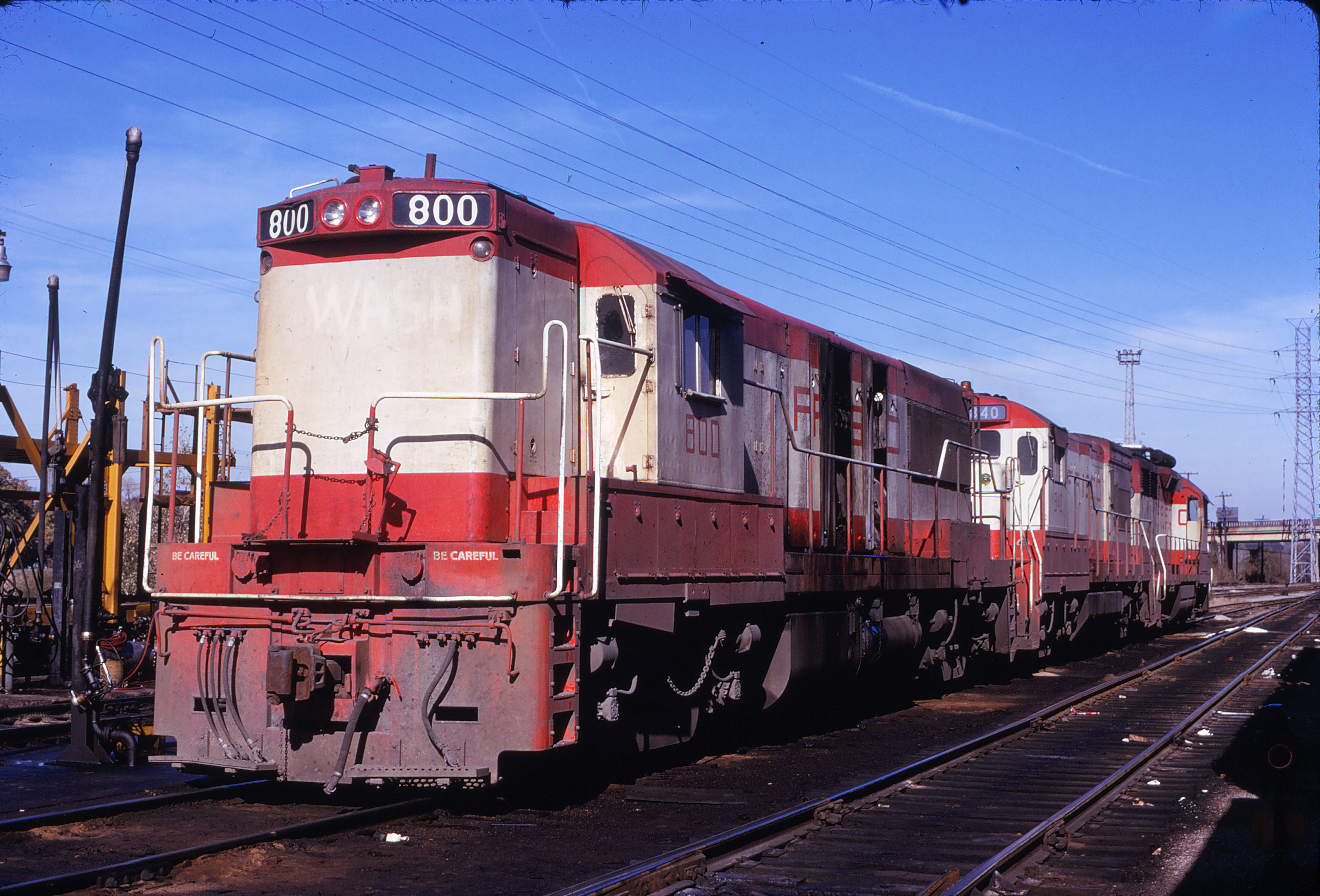
U25B 800

U25B 800 at St. Louis, Missouri on November 10, 1973
U25B 800

U25B 800 at St. Louis, Missouri on November 10, 1973.

The photograph was taken at the Mechanical Department’s locomotive service tracks area on the north side of Lindenwood Yard. This area is northeast of the diesel shop, south of the River Des Peres. The viaduct in the distance over the yard and river is Arsenal Street. Above the rear radiator of the GP35, in line with the lower portion of the yard light tower, is the rooftop of the yard tower.

Visible to the left of the locomotives are two of the fuel stands and hoses. Note the end of hose nozzle with twist-lock connector that can be attached to a locomotive fuel tank fill pipe. The nozzles feature a pressure backflow shutoff device to prevent fuel tank overtopping and spills.

The yellow autorack in the distance is on one of the repair-in-place (RIP) tracks. The Car Department operated five RIP tracks just north of and adjacent to the locomotive facilities.

The view is looking northeast.

Special thanks to Mark Davidson.
Posted in Slides | Tagged , , | Leave a comment

4-8-2 4302

4-8-2 4302 at Fort Scott, Kansas on July 11, 1947 (Arthur B. Johnson)
4-8-2 4302

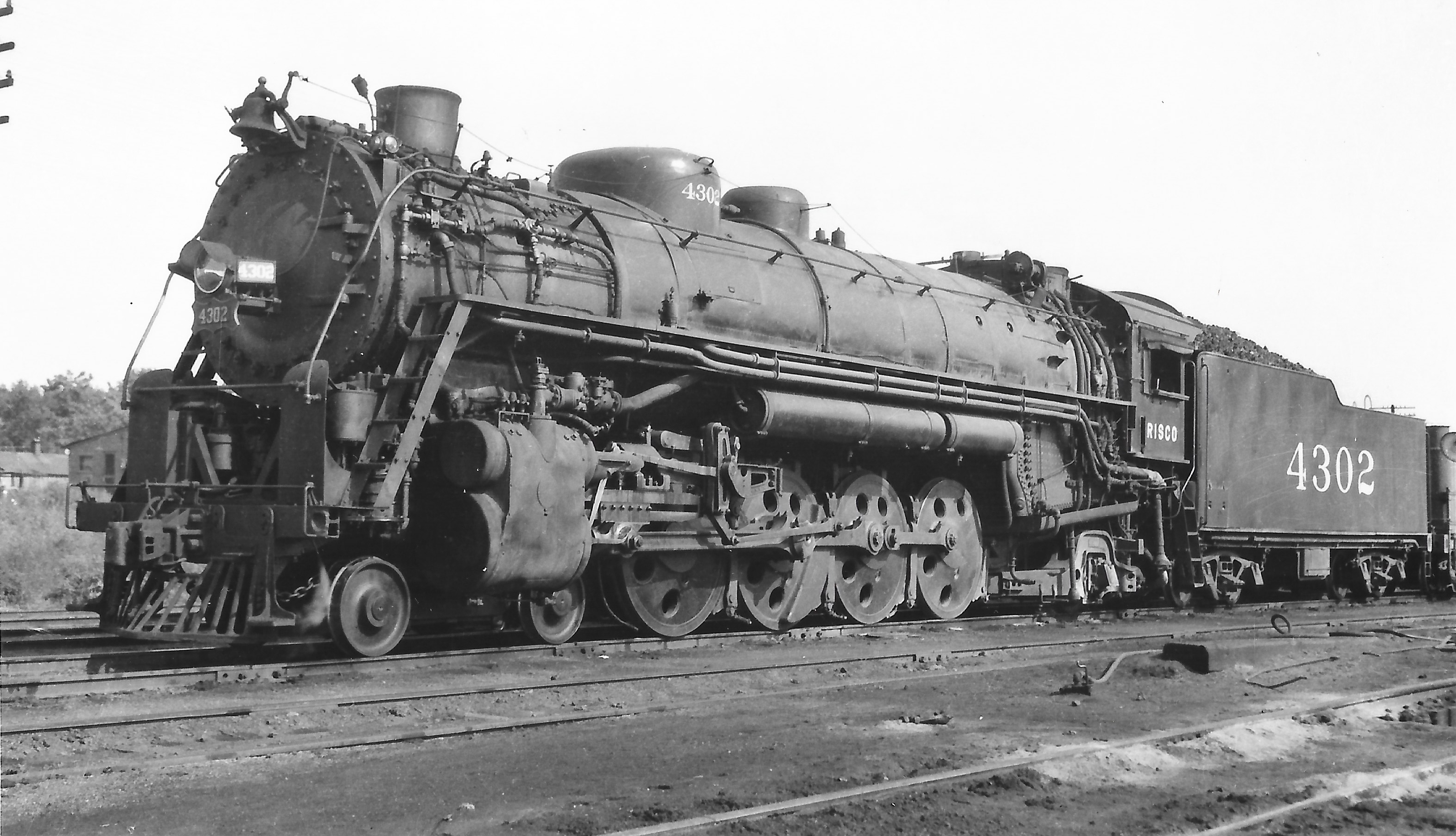
Frisco-built 4-8-2 4302 at Fort Scott, Kansas on July 11, 1947 (Arthur B. Johnson).

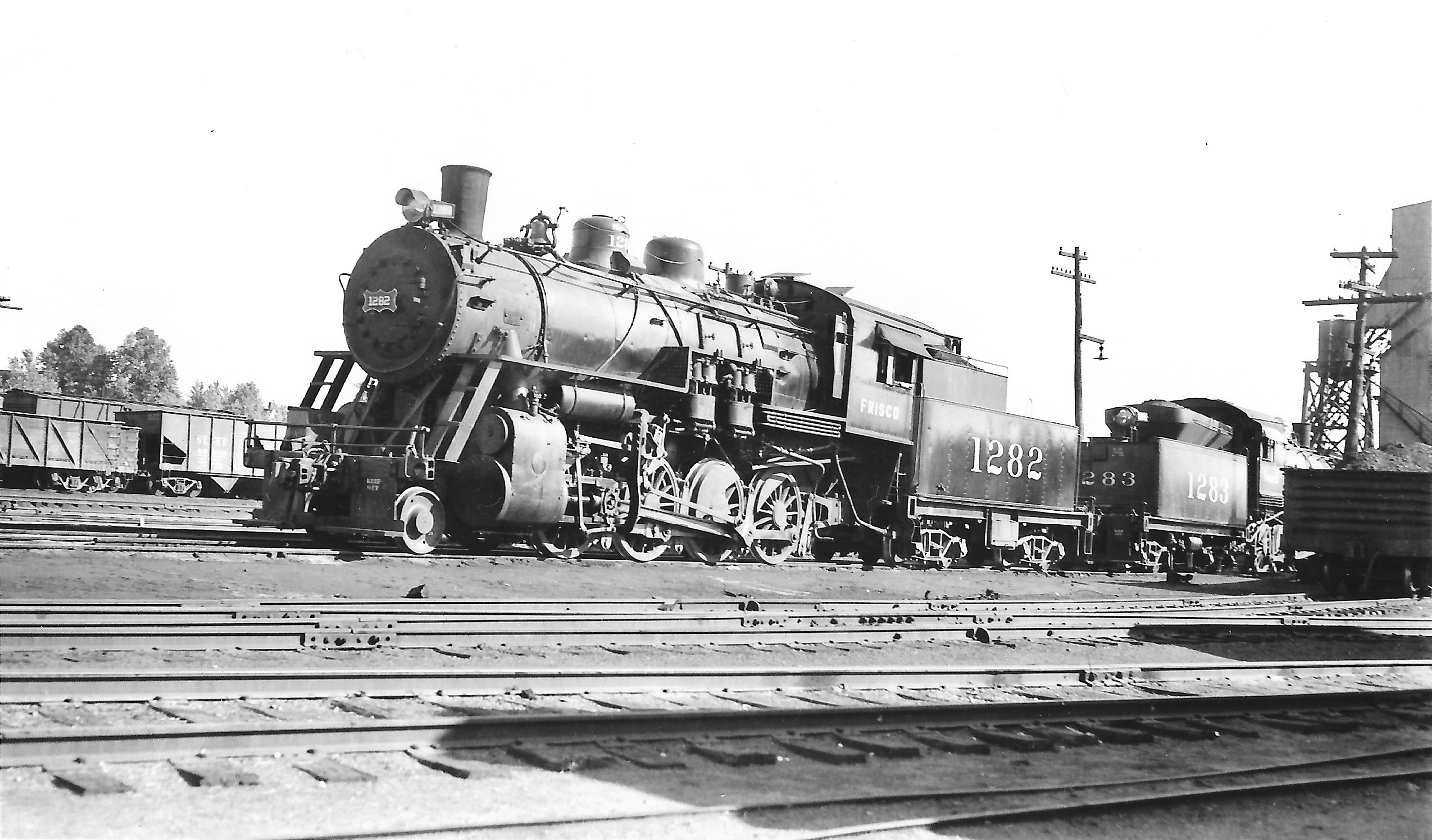
The locomotive facilities at Fort Scott during the steam era serviced coal fired engines. Included was a wood timber, and later concrete, coal tower for fuel. In this view coal is piled high in the locomotive’s tender.

As the fuel is burned on the firebox grate it creates considerable amounts of waste that falls and collects in the locomotive’s ash pan. Most of the air for proper combustion comes up through the firebox grate. Therefore, the ash pan must be cleaned regularly for the fire to burn properly.

Note in the lower left corner of the photograph the tie stub ends at the ash pit. As locomotives go through their turnaround servicing cycle they typically visit the ash pit track. The tools and hose in the foreground are for cleaning out an engine’s firebox ash pan.

The hook shaped metal tools are used to rake, shake and dump out the external combustion engine firebox grate and ash pan. Ash and cinders are dumped into the pit between the rails. Noncombustible pits were common to prevent the hot material, if dumped directly on the ground, from starting tie fires.

Water from the hose was sprayed to cool the firebox waste. Once cooled the waste material was loaded for disposal by conveyor, hoist, lift or shovel. Open top gondola and hopper rail cars were common in this service. Recycled material was distributed for railroad sub roadbed, roadway construction, concrete manufacturing and other uses.

Special thanks to Mark Davidson.
Posted in AJ Collection, KM Collection, Steam | Tagged , | 2 Comments

U25Bs 805 and 814

U25Bs 805 and 814 at Springfield, Missouri (date unknown)
U25Bs 805 and 814

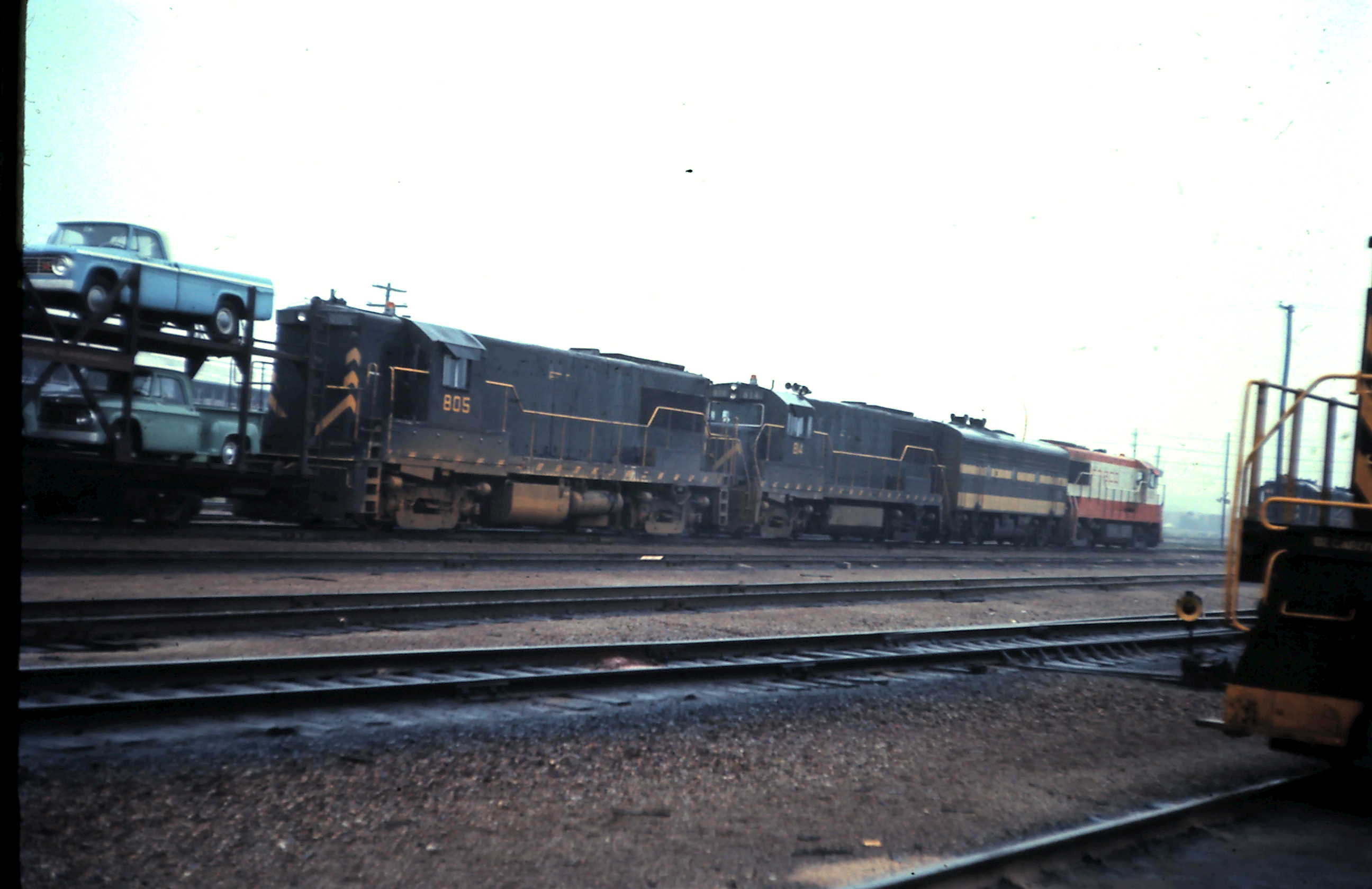
U25Bs 805 and 814 at Springfield, Missouri (date unknown).

The train is westbound entering the east end of Springfield Yard. This yard was also known as West Yard or Kansas Avenue Yard. Behind U25B 805, through the bi-level automobile carrier or autorack, one can see the northwest corner of the Springfield Stockyards. The head end locomotive is south of the service tracks area.

The oily track in the foreground is the lead to the east end of the service tracks area and further west the diesel shop. The photograph was taken from the diesel pocket-track. This locomotive longer term storage track is east of the Springfield Diesel Shop. Directly behind the photographer is the east end lead to the West Shops area, Benwood Yard and Clinton Subdivision.

Note the Alco locomotive parked on the diesel pocket track. The distinctive lower railing with hooped end just above the pilot was a common feature on their early locomotives, including Frisco owned models S-2, RS-1 and RS-2. In the distance, through its handrails, can be seen additional locomotives at the service tracks area.

The photograph was taken between early 1965 and late 1967. The earlier date is established by the presence of a locomotive in mandarin orange and white paint. This paint scheme first appeared on U25Bs 802 (repainted on February 14, 1965), and 816 (delivered new on March 12, 1965). The later date is established by the second generation Dodge D Series grills on the pickup trucks (model years 1965-1967). The grills were modified to a different design with the 1968 model year.

The view is looking southwest.

Special thanks to Mark Davidson.
Posted in FT Collection | Tagged , , , | Leave a comment