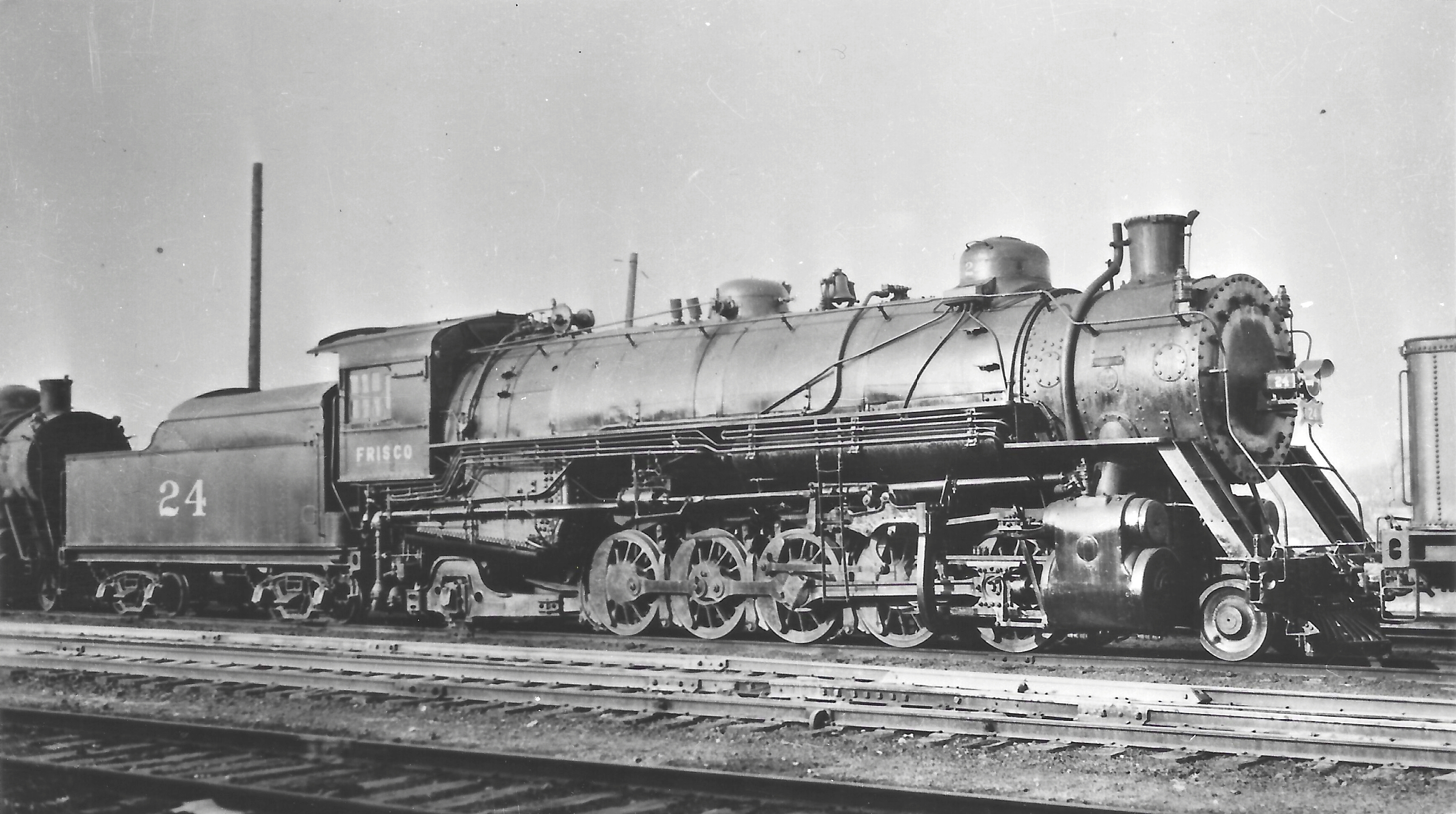
The Frisco Archive is pleased to present the photo collection of the late Arthur B. Johnson. Most photographs in the collection were taken by Mr. Johnson. Others are unlabeled or labeled with the name of the photographer. A word about the quality of these images: These are not scanned from slides, negatives or large format photographs. Most are scanned from 3″ X 5″ prints. Some are scratched. These are scanned at 600 DPI and are presented at the highest reasonable quality that is possible at the time of release. Most are quite acceptable when viewed at a resized resolution.
Photographs posted prior to April 28, 2017 appear on the Frisco Archive through the generosity of Robert Armstrong. Those posted after October 16, 2017 appear courtesy of Ken McElreath.
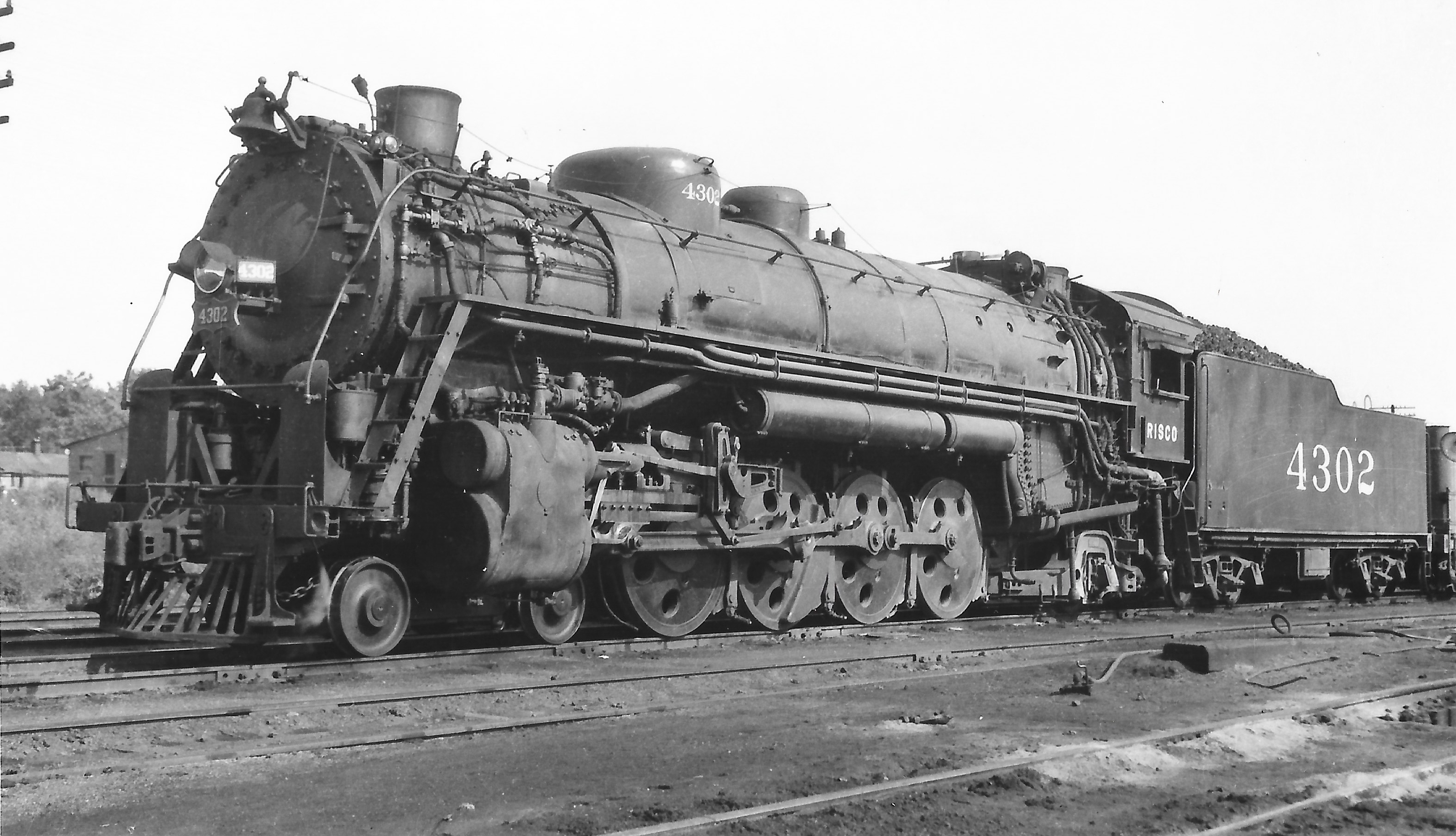
Frisco-built 4-8-2 4302 at Fort Scott, Kansas on July 11, 1947 (Arthur B. Johnson).
The locomotive facilities at Fort Scott during the steam era serviced coal fired engines. Included was a wood timber, and later concrete, coal tower for fuel. In this view coal is piled high in the locomotive’s tender.
As the fuel is burned on the firebox grate it creates considerable amounts of waste that falls and collects in the locomotive’s ash pan. Most of the air for proper combustion comes up through the firebox grate. Therefore, the ash pan must be cleaned regularly for the fire to burn properly.
Note in the lower left corner of the photograph the tie stub ends at the ash pit. As locomotives go through their turnaround servicing cycle they typically visit the ash pit track. The tools and hose in the foreground are for cleaning out an engine’s firebox ash pan.
The hook shaped metal tools are used to rake, shake and dump out the external combustion engine firebox grate and ash pan. Ash and cinders are dumped into the pit between the rails. Noncombustible pits were common to prevent the hot material, if dumped directly on the ground, from starting tie fires.
Water from the hose was sprayed to cool the firebox waste. Once cooled the waste material was loaded for disposal by conveyor, hoist, lift or shovel. Open top gondola and hopper rail cars were common in this service. Recycled material was distributed for railroad sub roadbed, roadway construction, concrete manufacturing and other uses.